
Last updated October 16, 2026
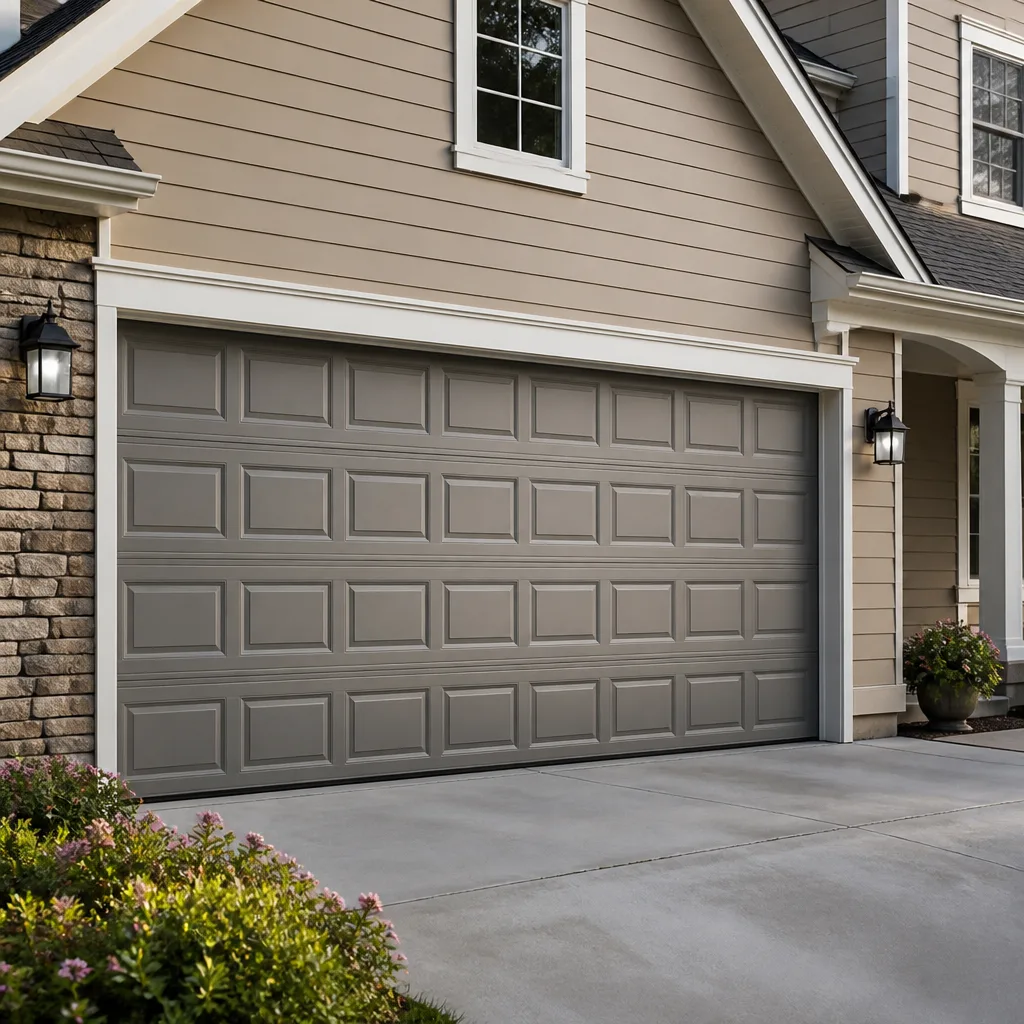 Raised-panel steel
 Carriage house
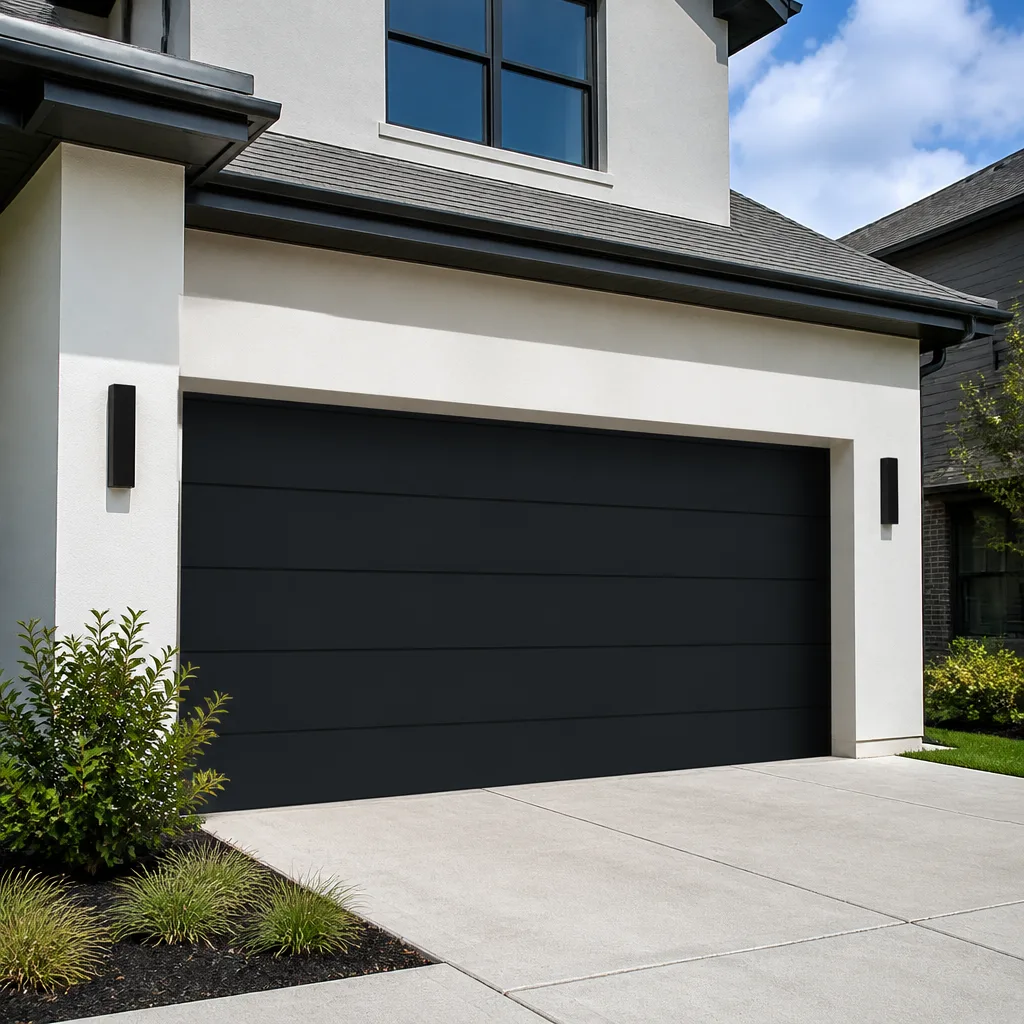 Modern flush
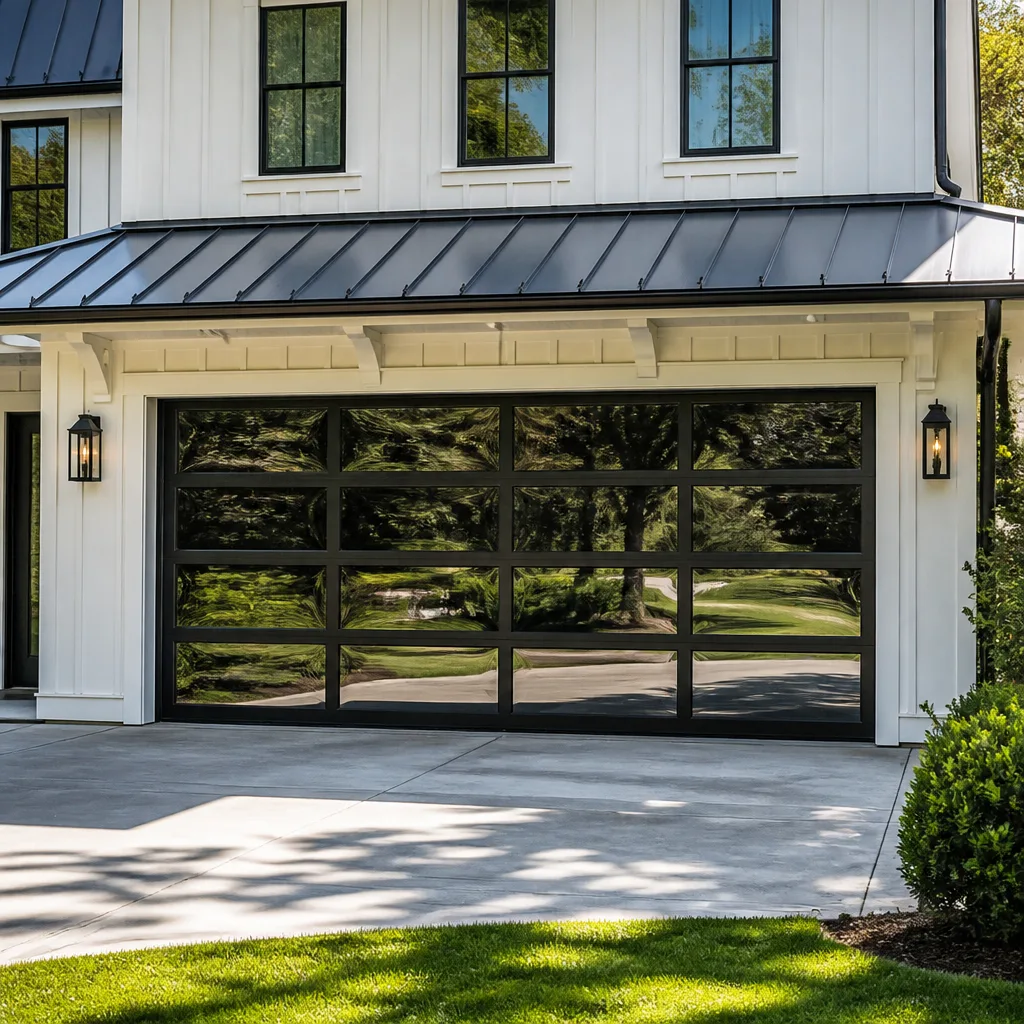 Full-view glass
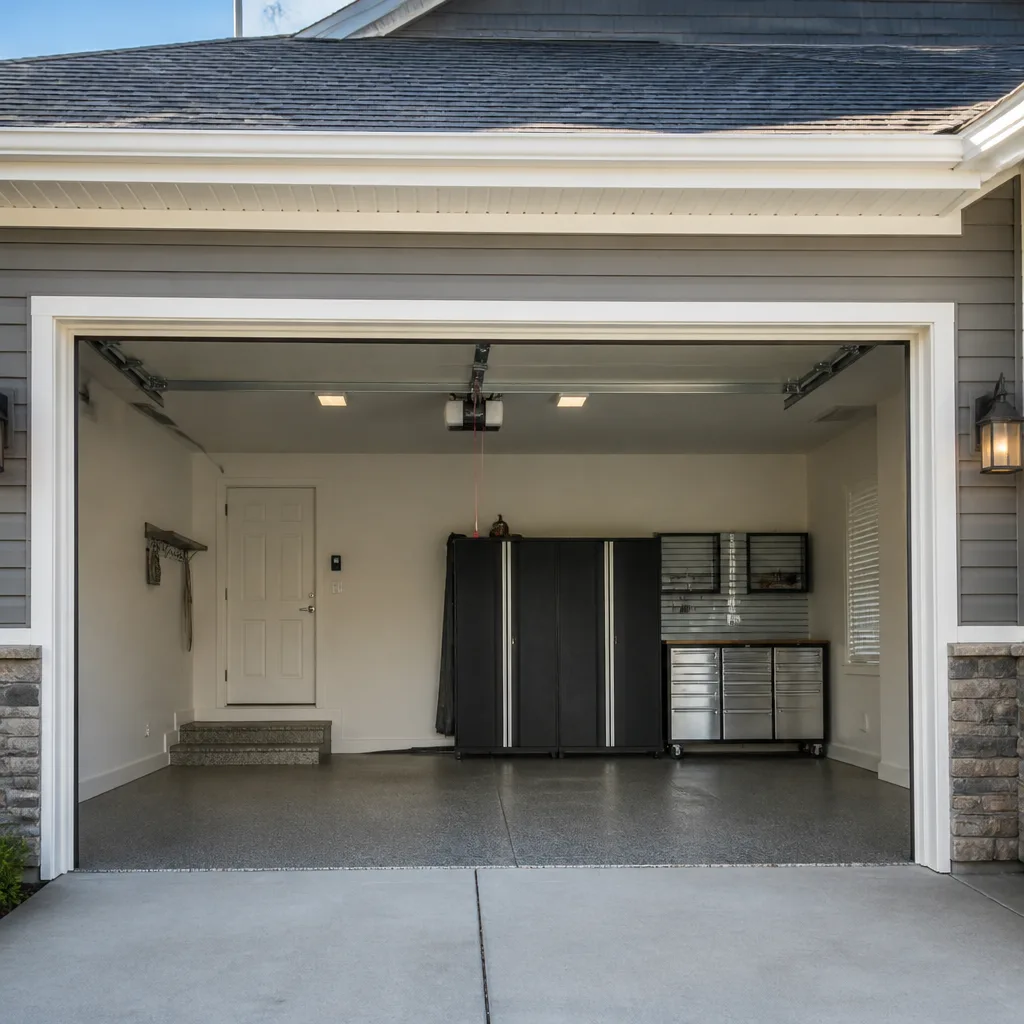 LiftMaster openers
 Chamberlain openers
Full 25-point door and opener safety check with every visit - springs, cables, rollers, tracks, and your LiftMaster or Chamberlain opener included
You get a price before we start. It does not change when the truck arrives.
Get your free estimateHow to Hire a Garage Door Contractor in San Diego: A Step-by-Step Guide
Search “garage door repair San Diego” right now and you’ll see ads for $29 service calls. What those ads don’t say: the $29 covers the van pulling up to your curb. Every spring, every cable, every adjustment gets quoted on your driveway after your door is already disassembled and the technician is holding the broken parts. This guide walks you through the exact vetting process we’ve developed after seeing thousands of San Diego homeowners get caught in that trap, including the licenses to verify, the questions to ask, and the written commitments to demand before anyone touches your door. For a deeper dive, see our Complete Guide to Garage Door in San Diego.
Styles & brands we work with
Quick Answer
Hiring a garage door contractor in San Diego comes down to three steps: verify the California C-61/D-28 license and insurance, demand a written price before any disassembly begins, and confirm the labor warranty in writing. A legitimate contractor will provide all three without hesitation. If any of those items gets dodged, move on to the next company.
Table of Contents
- Step 1: Verify the License, Insurance, and Workers’ Comp
- Step 2: Read the Warning Signs Before You Book
- Step 3: The Exact Questions to Ask on the Phone
- Step 4: How to Read a Garage Door Quote
- Step 5: The Written Price Requirement
- Step 6: What a Real Labor Warranty Looks Like
- What Makes San Diego’s Garage Door Market Different
- Common Mistakes to Avoid
- When to Call a Professional
- Frequently Asked Questions
- The Bottom Line
Step 1: Verify the License, Insurance, and Workers’ Comp
Before you book anyone, you need to confirm three separate pieces of paper exist. Skip this step and you’re gambling with your largest asset. Here’s what each one protects you from.
The California Contractor’s License (C-61/D-28)
California requires any contractor performing garage door work for more than $500 in labor and materials to hold a specialty license in the D-28 category, known formally as the C-61/D-28 Door and Gate specialty. This isn’t a general handyman credential. The D-28 license specifically covers garage door installation, repair, and service work. You can verify a license number in under two minutes at the Contractors State License Board website. Type in the business name, confirm the license is active, and check that the classification listed is D-28 rather than a general B license being stretched beyond its scope. A B General Building license allows some door work, but a company holding D-28 has demonstrated trade-specific knowledge through testing and experience requirements. Our company, Bramwell Garage Doors San Diego home office, operates under full licensing and carries the D-28 specialty classification for every technician we dispatch.
General Liability Insurance
Ask for a certificate of insurance naming you, the homeowner, as an additionally insured party. This certificate comes directly from the insurance company, not from the contractor. It costs the contractor nothing to add you for a single job and takes about ten minutes. If a company hesitates on this request, that hesitation tells you something. General liability covers damage to your property during the work. A garage door that falls off its track can destroy a car hood, crack a driveway, or tear through drywall. You want the policy in writing before the door ever moves.
Workers’ Compensation Coverage
This one gets skipped by homeowners constantly, and it’s the one that creates the biggest financial exposure. If a technician gets injured on your property and the company doesn’t carry workers’ comp, the injury claim can fall on your homeowner’s insurance. In California, contractors with no employees can be exempt from workers’ comp, but a company with multiple technicians must carry it. Ask directly: “Do you carry workers’ compensation coverage for your technicians?” A yes answer should come with a policy number you can verify. A no answer means you’re the de facto insurance policy.
Step 2: Read the Warning Signs Before You Book
San Diego has a specific breed of door-to-door garage door solicitors that work neighborhoods in waves, usually after big storms or temperature swings. They share several traits worth memorizing.
Unmarked Vans and Magnetic Signs
Legitimate contractors run marked vehicles with the company name, license number, and phone number permanently lettered on the door. The door-to-door operations often use rental vans, personal trucks, or vehicles with magnetic signs that peel off at the end of the day. A magnetic sign costs $60. A real company vehicle costs real money and signals a company that plans to exist next year when you need warranty work done.
Verbal-Only Quotes
This is the big one. A technician who quotes you $340 verbally and then writes nothing down has no accountability for the final invoice. You’ll hear phrases like “we’ll see what we find” or “depends on what we run into.” In San Diego’s garage door market, verbal-only pricing is the single strongest predictor of an invoice that lands $200 to $600 higher than the driveway conversation.
Pressure to Decide Before They “Leave the Neighborhood”
This is a classic close. The technician implies that leaving now means paying a second trip charge later, so you should authorize everything right this moment. A legitimate repair company in San Diego schedules work by appointment and is fine returning later that week. Any company that can only help you if you sign within the next twenty minutes is managing its pipeline, not your safety.
For a broader look at how repair work is handled in our city, visit Garage Door Repair in San Diego.
Step 3: The Exact Questions to Ask on the Phone
We’ve built this list from two decades of hearing San Diego homeowners describe the companies that burned them. These questions take three minutes to ask and save an average of $400 on a typical repair job.
- “What is your California contractor’s license number?” Write it down. Verify it online while they’re still on the phone. A legitimate company recites the number without pausing.
- “Will the technician provide a written price before starting any work?” The answer must be an unqualified yes. “Depends on the job” or “we’ll see what we find” is a no wearing a costume.
- “Does the technician carry the common parts on the truck?” Torsion springs, extension springs, cables, rollers, hinges, and opener gear kits should be on board. A company that stocks parts completes 85% of repairs in one visit. A company that doesn’t stock parts schedules a second visit, and that second visit comes with new charges.
- “What exactly does your labor warranty cover, and for how long?” Listen for specifics: duration in months, failure modes covered, and whether the warranty sits with the company or with the individual technician. A vague answer means no warranty.
- “Does a live person answer this number after 5 p.m.?” San Diego garage doors fail at convenient times about half the time. The other half is Sunday morning with a car stuck inside.
- “Will I receive a written guarantee with my receipt?” Not a verbal one. A physical document stating what’s covered and for how long.
Step 4: How to Read a Garage Door Quote
Garage door quotes break into a few standard line items. Understanding what each term means prevents the “service call fee” game where a $29 advertised price becomes a $29 fee plus $190 in nebulous charges.
The Line Items, Explained
- Service call fee: This covers the technician showing up. In San Diego, this typically runs $45 to $95. Some companies waive it with a repair. Others keep it separate. What matters is whether it’s disclosed before booking, not after.
- Labor: The technician’s time, usually billed flat per repair type rather than hourly. A spring replacement labor charge in San Diego typically sits between $75 and $150 of the total job price.
- Parts: The actual components being installed. This is where markup happens. A torsion spring that costs $35 wholesale might appear as a $90 to $130 line item, and that’s normal. Retail carries storage, truck space, and dead inventory costs. What isn’t normal is markup above 3x.
- Trip charge: Some companies add a separate travel fee, especially for areas like Chula Vista or Poway that sit at San Diego’s edges. A legitimate company folds travel into the service call fee. A separate trip charge stacked on top of a service call fee is double-dipping.
- Flat price: The better model for most repairs. We quote most spring jobs, cable replacements, and opener repairs as a single flat price: parts, labor, service call, and trip folded into one number. You know the total before we touch the door.
When you’re comparing replacement options for a full door, our Garage Door Installation in San Diego guide walks through what affects pricing.
Step 5: The Written Price Requirement
Here’s the rule we tell friends, family, and anyone who asks: if a contractor won’t put the total price in writing before disassembling the door, that contractor has no accountability for the final number. It doesn’t matter how reasonable the verbal quote sounded. It doesn’t matter how trustworthy the technician seems. Without a written price, the invoice arriving at the end of the job has no relationship to the conversation that happened at the start.
This isn’t a technicality. It’s the entire game. The bait-and-switch model in San Diego’s garage door industry works like this: a company advertises a low service call fee, sends a technician who takes the door apart, and then discovers “additional issues” once the springs are off the shaft and the cables are dangling. At that point, the homeowner has a broken door and a technician standing next to it. The negotiating leverage disappeared the moment the first bolt came out.
A written price before disassembly eliminates this. It creates a document you can hold. It creates a number the company is obligated to honor. At Bramwell, we’ve built our entire operating model around this specific practice. Every technician presents a written price before starting any work, without exception. That’s the Kingswell standard we’ve maintained since 2001, and it’s why we can say with confidence that a company unwilling to do the same is making a strategic choice to preserve its ability to inflate the invoice.
Most Garage Door Spring Repair in San Diego jobs run $150 to $280 for the full replacement, parts and labor included. We quote that number in writing before we touch the door, and it doesn’t change when the work is done.
Step 6: What a Real Labor Warranty Looks Like
Parts warranties and labor warranties are different things, and the distinction matters. A spring manufacturer may warranty the spring for five years against breakage, but if the labor to replace that failed spring isn’t covered, the “warranty” leaves you paying $120 to install a free $35 part.
A legitimate labor warranty specifies three things:
- Duration: Measured in months, not in vague phrases like “backed by our reputation.” Our standard is 365 days on every repair, in writing.
- Coverage: What failure modes are included. Does the warranty cover the part breaking? The adjustment drifting? The installation failing? A real warranty describes what happens when things go wrong, not just that they won’t.
- Return obligation: Who comes back, and is the company contractually required to? With us, the 365-Day Done Right Promise is written into the guarantee: if the repair fails within a year, we return and fix it at no charge. The commitment sits with the company, not with whatever technician happened to do the work.
Ask every contractor you’re considering: “Show me the written warranty. That is, the document itself.” A company that produces a printed guarantee with specific terms is rare. A company that produces one and has been operating under that same standard since 2001 is rarer still.
What Makes San Diego’s Garage Door Market Different
San Diego’s coastal climate creates garage door problems that homeowners in Phoenix or Las Vegas never see. The salt air off Mission Bay and the Pacific corrodes hardware faster here. Tracks rust. Cables fray at the bottom brackets where moisture collects. The temperature swings through fall and winter, especially in inland communities like Santee and El Cajon where days start at 45 degrees and end at 75, cause springs to cycle through expansion and contraction daily. Our Seasonal Garage Door Care for San Diego: Year-Round Homeowner’s Guide covers how to protect your door through these shifts.
A torsion spring, the heavy coil mounted above the door that handles most of the lifting weight, is rated for a specific number of cycles, typically 10,000. In a household where the door opens four times a day, that’s roughly seven years of life. But in San Diego’s coastal neighborhoods, where salt accelerates metal fatigue, we regularly see springs fail at the six-year mark. It’s why a spring replacement quote in Chula Vista might include a note about corrosion resistance that a quote in Temecula wouldn’t.
Door-to-door solicitation is also more common here than in most markets. The density of single-family homes in neighborhoods like Clairemont, North Park, and Rancho Bernardo makes it easy for solicitors to work block by block. After a storm, expect knocks on doors. After a heat wave, expect more. These aren’t unlicensed operations, necessarily. Some hold valid licenses and still run the bait-and-switch model. The license check matters, but it’s not the whole vetting process.
If you’re in the market for a full replacement, we carry and install Amarr, Wayne Dalton, Craftsman, and Raynor doors, and our technicians are trained on each brand’s specific quirks. A Wayne Dalton door from the 90s, for example, uses a TorqueMaster spring system hidden inside the tube that many technicians misdiagnose on sight. Catching that on the first visit is the difference between a $40 diagnosis and a $600 unnecessary replacement.
Common Mistakes to Avoid
- Hiring without checking the license number. In San Diego, unlicensed handymen advertise on the same platforms as licensed contractors. The license check takes two minutes on the CSLB website and filters out the bottom third of the market immediately.
- Accepting a verbal quote. A spoken price has no weight. If it isn’t written down before work starts, it isn’t real. This single rule eliminates most of the bait-and-switch operators in San Diego.
- Skipping the workers’ comp check. A technician hurt on your property without workers’ comp coverage becomes a claim against your homeowner’s insurance. The telephone call to verify coverage takes ninety seconds.
- Choosing the lowest bid without reading it. A $180 spring replacement that doesn’t include the service call fee or the trip charge isn’t $180. Add the hidden lines and it’s $310. Always compare the total, not the headline number.
- Paying in full before the door is tested. Run the door through five full cycles before you hand over a check. Listen for grinding, watch for jerky movement, and confirm the safety reversal system works. A door that works on cycle one but throws a cable on cycle four isn’t fixed.
- Ignoring the door’s warning signs for weeks. A door that’s noisy, slow, or uneven is telling you something. The repair is almost always cheaper when addressed early. In San Diego’s coastal areas, rust compounds quickly once it starts.
- Falling for the “leaving the neighborhood” pressure. A company that can only help you if you decide in the next fifteen minutes doesn’t want you to think about the price. Take the card. Think it over. Call a second company for comparison.
When to Call a Professional
Some jobs are safe to handle yourself: lubricating hinges with white lithium grease, tightening loose handle screws, testing the balance with the opener disengaged. Other jobs are genuinely dangerous. Torsion springs store hundreds of pounds of tension. When one breaks, that energy releases unpredictably, and a nearby head or hand takes the hit. Cables under tension can slice through gloves and skin. A door off its track can fall and crush whatever is beneath it. If your springs are broken, your cables are frayed, or your door has jumped a track, stop using the door and call someone who does this daily. Not sure whether to DIY? Read our DIY vs Professional Garage Door: The San Diego Homeowner’s Decision Guide first. Bramwell Garage Doors San Diego offers free estimates across San Diego. Call (619) 374-2463 and we’ll send a technician within the window we give you, with a written price before anything comes apart.
Frequently Asked Questions
Most residential repairs in San Diego fall between $125 and $350 depending on the job. A torsion spring replacement typically runs $150 to $280, parts and labor included. A cable replacement runs $90 to $180. An opener gear kit replacement runs $110 to $200. Call (619) 374-2463 for an exact quote on your specific door.
Yes. Most spring and cable repairs are completed the same day you call, and our technicians carry the common parts on the truck. A live person answers (619) 374-2463 24 hours a day, including weekends and holidays.
No. Our technicians present a written price before any work begins, and that number doesn’t change when the job is done. If a quoted repair turns out to need more parts than expected, we stop and provide an updated written price before proceeding. The number you hear is the number you pay.
Yes. Our vehicles stock torsion springs in common sizes, extension springs, cables, rollers, hinges, and opener gear kits. Most repairs are completed in one visit, which saves you a second service call fee and a second day of taking time off work.
We’re authorized to work on LiftMaster, Chamberlain, Genie, Clopay, Amarr, Wayne Dalton, Craftsman, and Raynor products. That covers roughly 95% of the doors hanging in San Diego garages today.
The Promise covers any failure of the repair we performed within one year of service. If the spring we installed breaks, if the cable we replaced snaps, if the opener we fixed stops working, we return and fix it at no charge. This commitment is written into the guarantee on every job.
The Bottom Line
Hiring a garage door contractor in San Diego doesn’t require technical knowledge. It requires asking the right questions and refusing to proceed without written answers. Verify the license and insurance. Demand a written price before disassembly. Confirm the labor warranty exists on paper. Walk away from verbal-only quotes, unmarked vans, and pressure to decide immediately. The good contractors in this city are easy to identify because they volunteer everything listed above before you ask. The rest rely on you not knowing what to ask. Now you know.
Written by Marcus Ellery, Owner at Bramwell Garage Doors San Diego, serving San Diego since 2001.
See the difference
 Before
 After
After Before
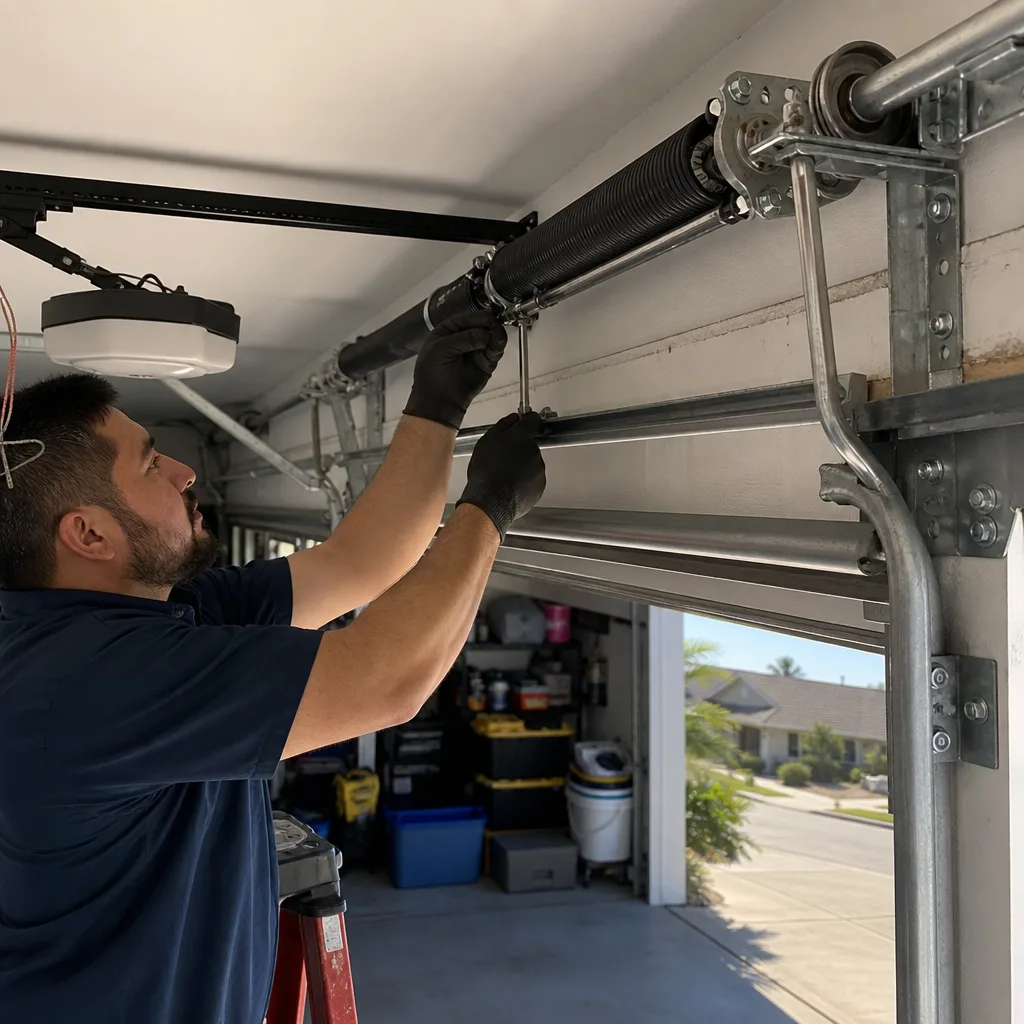 After
After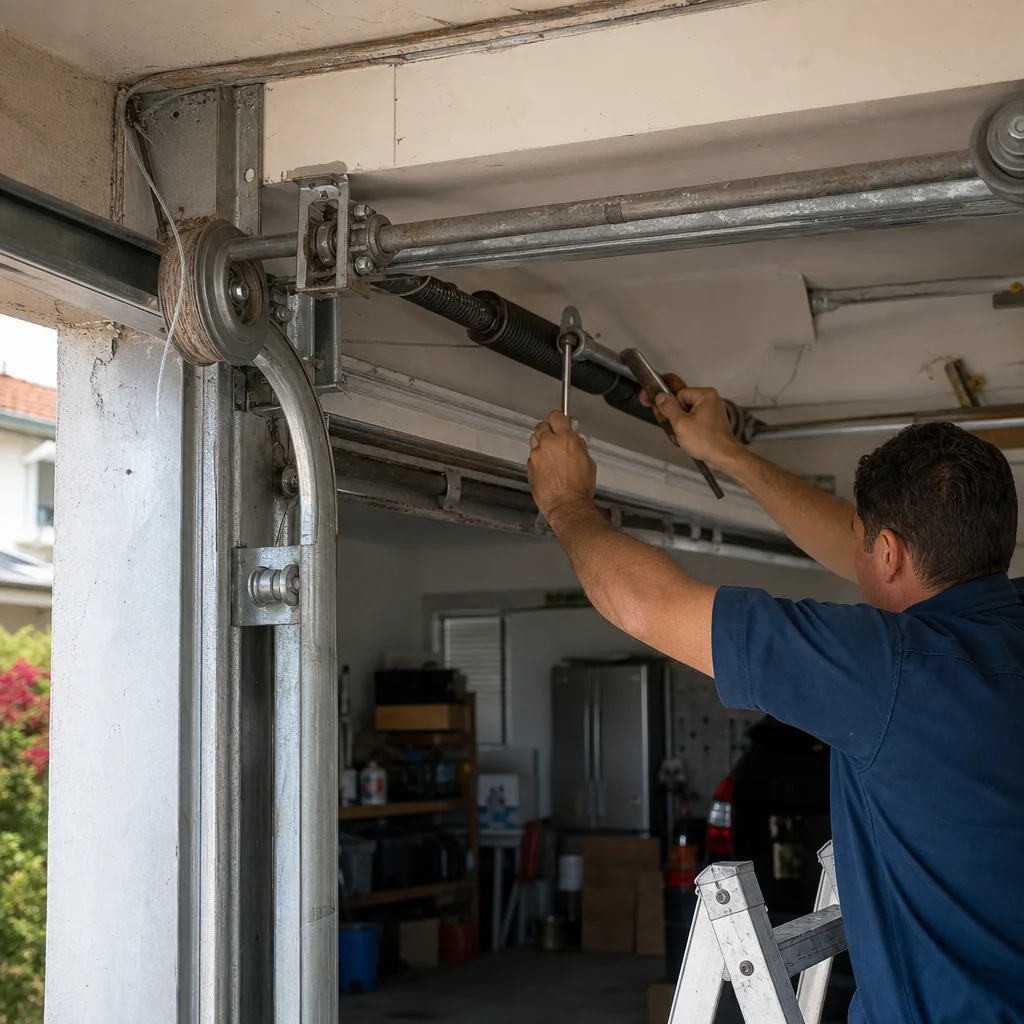 Before
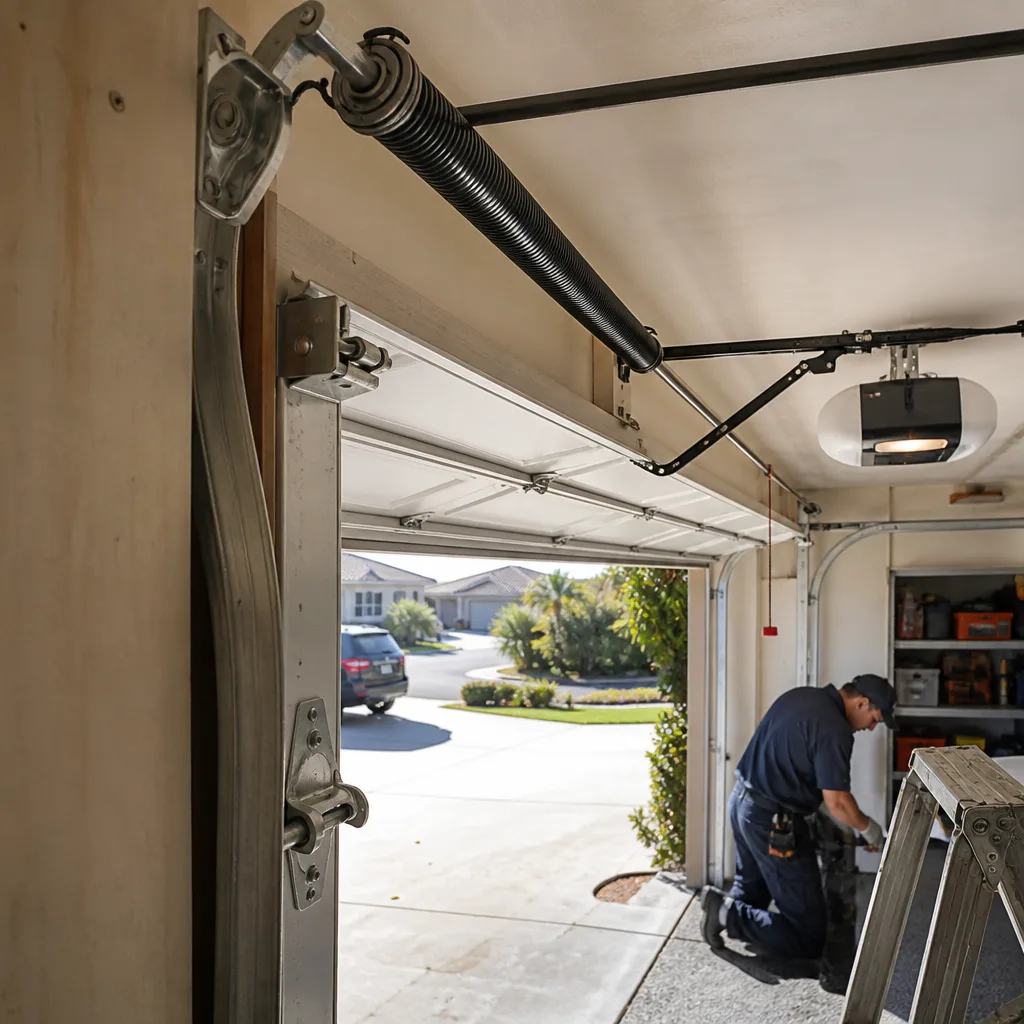 After
After