
Last updated October 16, 2026
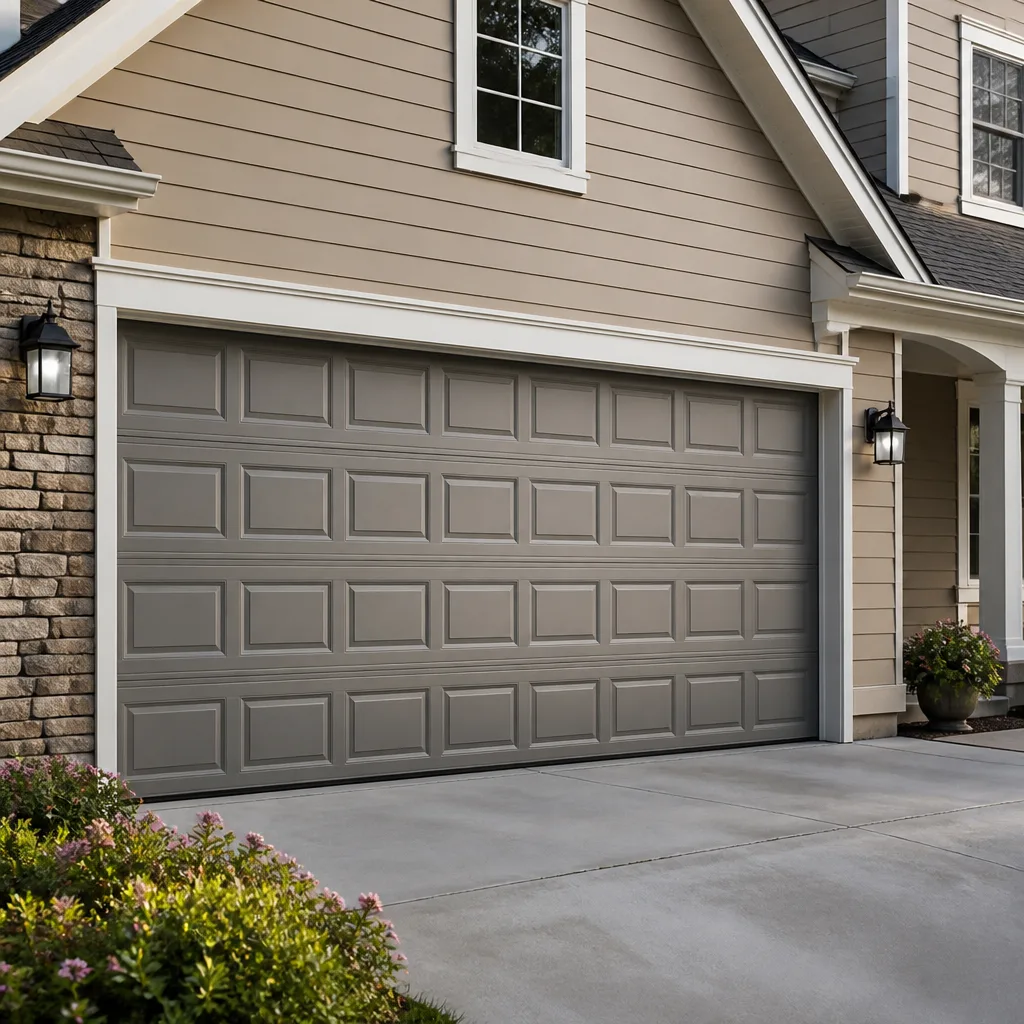 Raised-panel steel
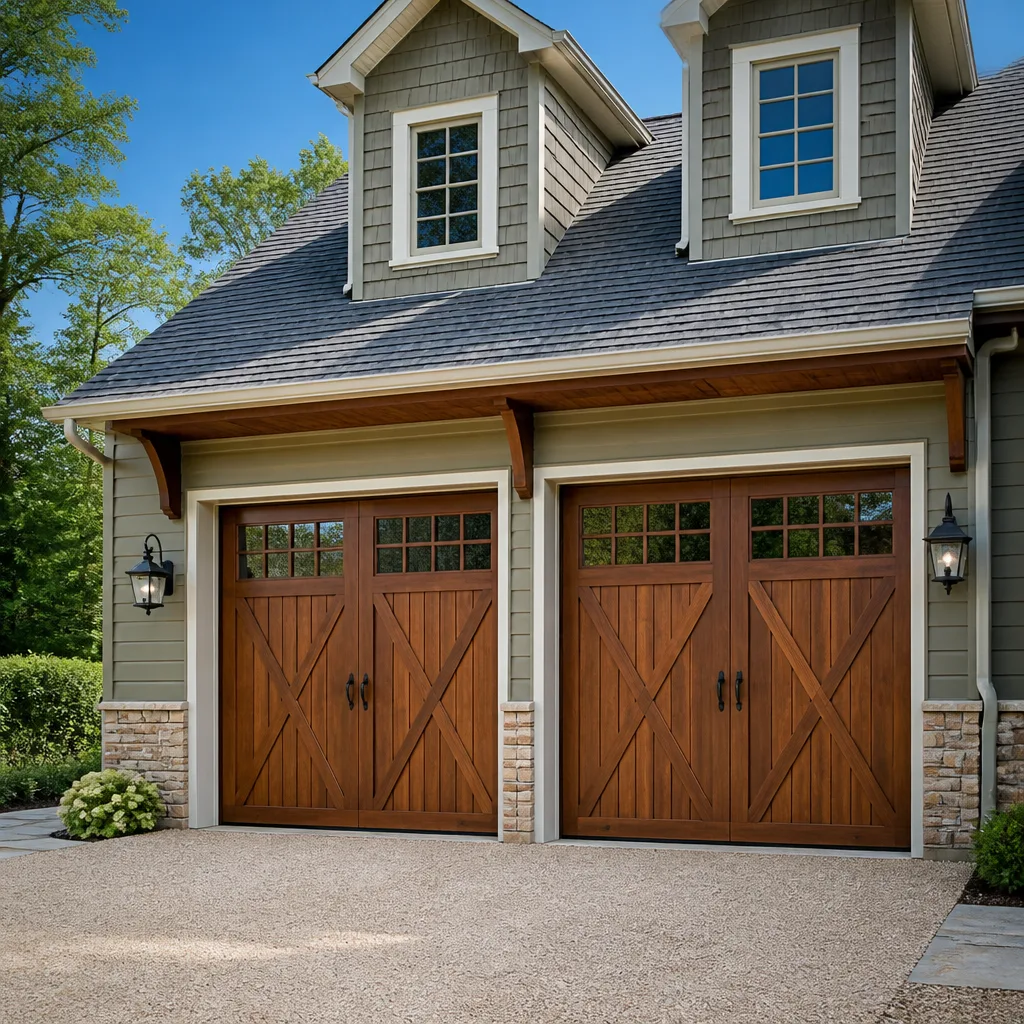 Carriage house
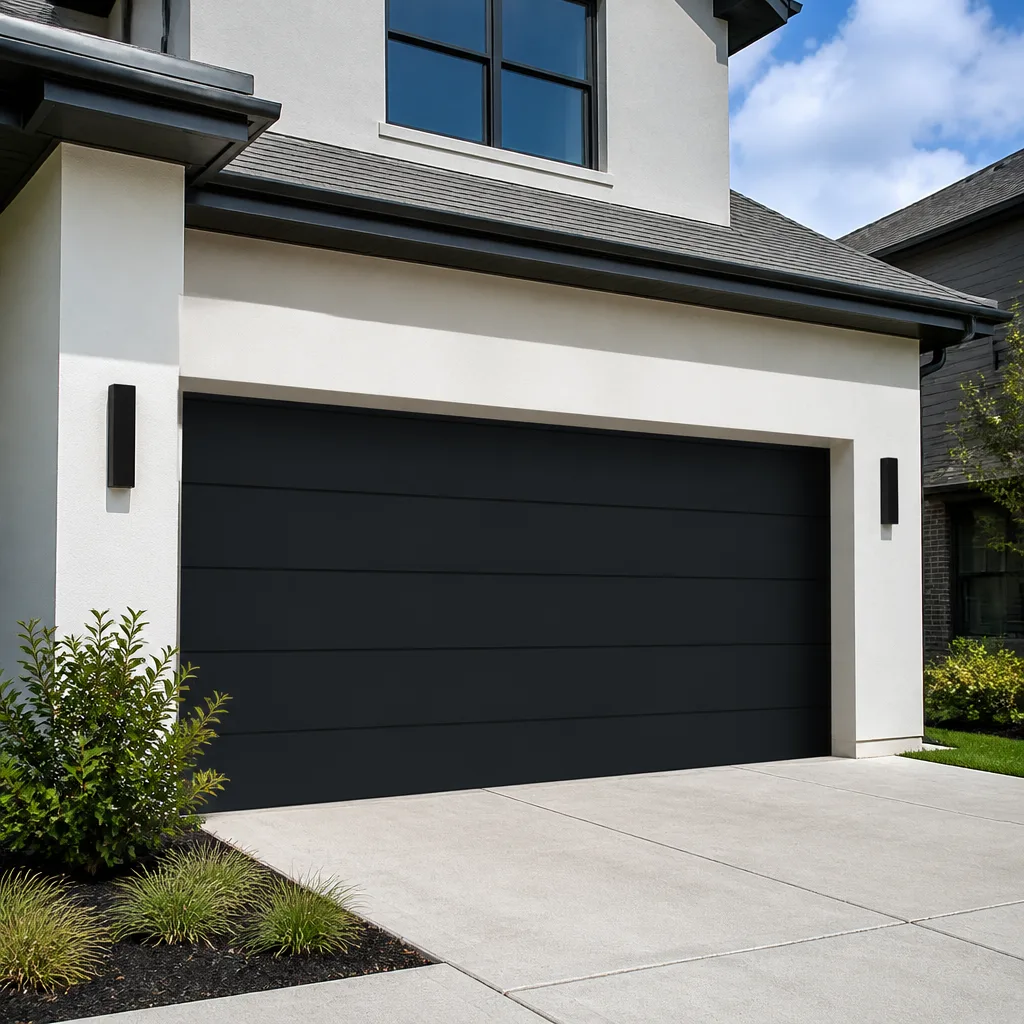 Modern flush
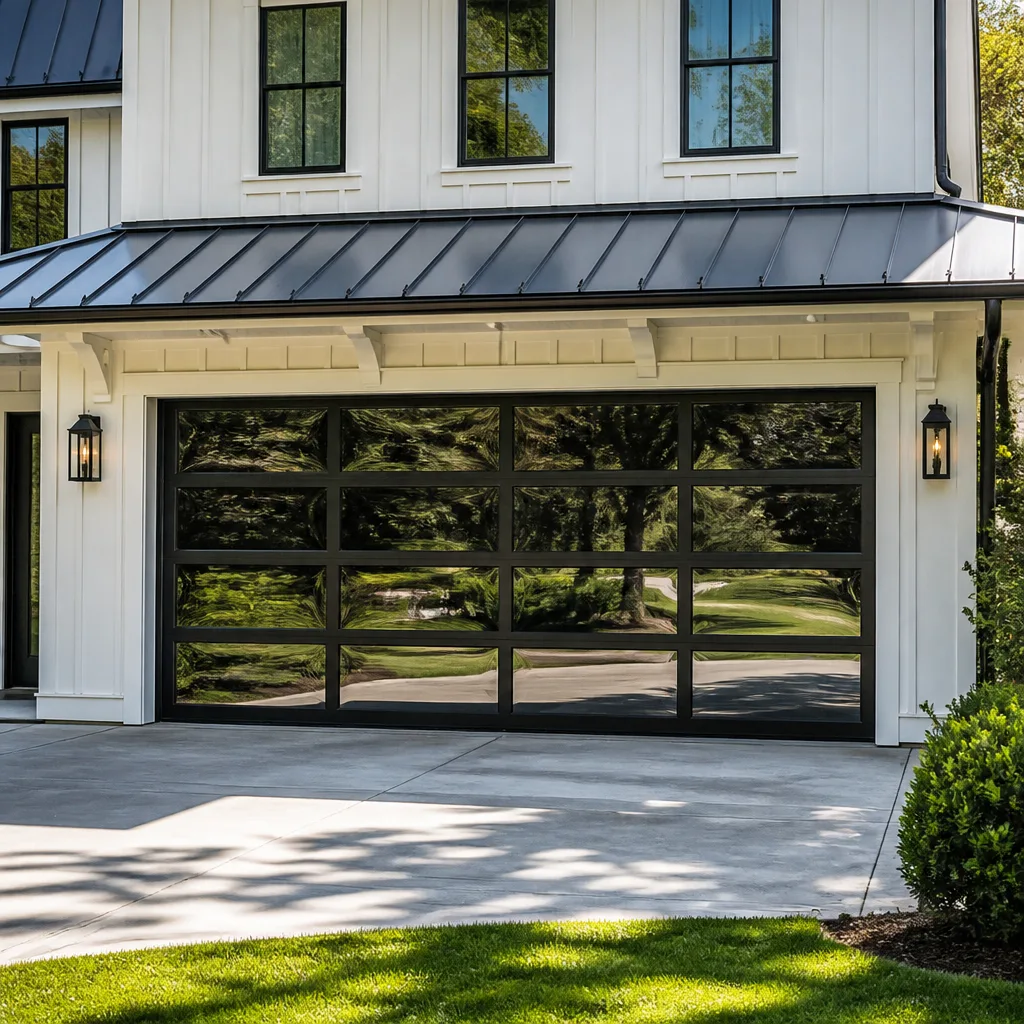 Full-view glass
 LiftMaster openers
 Chamberlain openers
Full 25-point door and opener safety check with every visit - springs, cables, rollers, tracks, and your LiftMaster or Chamberlain opener included
You get a price before we start. It does not change when the truck arrives.
Get your free estimateThe Complete Guide to Garage Door in San Diego
Here’s a number most San Diego homeowners never think about until a door fails: a garage door can weigh between 130 and 400 pounds, and it cycles open and closed roughly 1,500 times a year. That’s a lot of wear on springs, cables, and rollers, and it happens in a climate that punishes metal in ways a Minnesota garage never sees. Most garage door guides were written for the Midwest: wood swelling in humidity, springs snapping in freezing temperatures. San Diego’s actual enemies are subtler: salt corrosion two miles from the coast, UV bleaching on south-facing doors, and stucco framing that hides non-standard rough openings until the installer shows up. This guide walks through what San Diego homeowners actually need to know before they repair, replace, or upgrade a garage door, from material choices that survive the marine layer to what a written guarantee should actually say. For more guides & resources, see our blog.
Quick Answer
Choosing or repairing a garage door in San Diego comes down to three local factors: your home’s distance from the Pacific (which determines corrosion risk on steel components), whether your stucco home has a standard or field-measured rough opening, and what your HOA requires for color and panel style before you spend a dime. For most San Diego homes, a mid-grade steel door with a corrosion-resistant finish, torsion springs rated for 10,000 cycles, and a written warranty covering parts and labor for at least one year is the practical sweet spot. Repair pricing in San Diego typically runs $95 – $180 for a service call plus parts, with full spring replacement commonly landing between $150 – $280.
Styles & brands we work with
Table of Contents
- How San Diego’s Climate Changes Your Garage Door Choices
- Why Stucco Homes Need Field Measurement, Not Catalog Sizing
- HOA Rules in San Diego: What Can Void a Door Choice
- Torsion vs. Extension Springs: What San Diego Tract Homes Actually Have
- Door Materials That Survive the Marine Layer
- What a Written Repair Guarantee Should Actually Say
- What Garage Door Repair Costs in San Diego
- Maintenance That Extends Door Life in Coastal Air
How San Diego’s Climate Changes Your Garage Door Choices
San Diego’s climate is mild, which means homeowners rarely think about their garage door until it stops moving. But the same marine layer that keeps temperatures comfortable also carries salt and moisture that settles on metal surfaces night after night. The practical rule we use with customers is what we call the two-mile rule: homes within two miles of the Pacific experience noticeably faster corrosion on exposed steel and hardware than homes east of Interstate 15. In Clairemont, Point Loma, Ocean Beach, and La Jolla, we regularly see spring coils with surface rust after four or five years, while the same spring in Rancho Bernardo or Poway might go a decade before showing wear.
This matters for two decisions. First, steel gauge: a 24-gauge steel door is the budget standard nationwide, but within the two-mile coastal band it dents more easily and its thin skin shows rust faster once the factory finish gets scratched. We generally recommend 25- or 24-gauge steel minimum for inland San Diego, and upgrading to a factory-applied corrosion-resistant finish, not a powder coat applied at a local shop, for coastal zones. Second, hardware: rollers, hinges, and brackets made from galvanized steel hold up far better than zinc-plated varieties, which start showing white oxidation within two years of salt exposure. The difference in parts cost is often under $40.
UV is the other San Diego factor. South-facing and west-facing doors in neighborhoods like Mira Mesa, Scripps Ranch, and Carmel Valley absorb direct afternoon sun most of the year. Fiberglass doors fade unevenly, and painted steel doors with dark colors, especially deep reds, blues, and black, can reach surface temperatures that cause the paint to chalk within five to seven years. If your door faces southwest, a lighter color or a factory finish with UV inhibitors is the difference between a door that looks new at year eight and one that looks tired at year five.
Why Stucco Homes Need Field Measurement, Not Catalog Sizing
San Diego’s housing stock leans heavily toward stucco construction, and stucco has a quirk that matters for garage doors: the rough opening, which is the actual framed hole the door sits in, often does not match the catalog dimensions a manufacturer assumes. Builders in the 1980s through early 2000s, when many San Diego tract communities went up, frequently poured slab foundations and framed openings with slight variations. A door ordered as a standard 16×7 from a catalog can arrive half an inch too wide or a quarter inch too tall for the actual opening, and the installer discovers this only after the old door is off. Check our Garage Door Permits, Codes & Inspections in CA: What You Need to Know for related requirements.
The fix is field measurement. Before any door is ordered for a San Diego stucco home, the installer should measure the opening at three points horizontally and three points vertically, then check for square by measuring both diagonals. If the difference exceeds half an inch, the door should be ordered with custom side jambs or a trim adjustment. This is not a catalog problem, it’s a field-fit problem, and it’s the most common reason a new door installation in San Diego becomes a two-day job instead of a one-day job. A reputable installer will always measure before ordering. If a company quotes a new door price over the phone without someone visiting the home or requesting photos of the opening, the number is a guess, not a quote.
HOA Rules in San Diego: What Can Void a Door Choice
San Diego County has some of the highest HOA participation rates in California, particularly in master-planned communities like Otay Ranch, Civita, 4S Ranch, Del Sur, and Santaluz. Most of these HOAs govern garage door appearance through architectural guidelines, and the process carries a timeline that catches homeowners off guard. A typical HOA architectural review takes 15 to 45 days after submission, and some boards meet only monthly, which means a decision made in early April can be approved in late May regardless of when the door was purchased.
The practical consequence is this: if you buy a door today and your HOA rejects the color or panel style after the fact, you own a door you cannot install. Before you spend money, pull your HOA’s architectural guidelines and check three things. First, allowed colors: many San Diego HOAs restrict garage doors to a palette of earth tones, warm whites, or specific manufacturer color codes. Second, panel style: some communities require flush panels, others allow raised panels, and a few forbid windows in the top section. Third, material finishes: a handful of coastal HOAs specifically require corrosion-resistant steel or composite doors in response to salt damage complaints.
We’ve seen homeowners in Scripps Ranch and Rancho Peñasquitos order a door in a color they assumed matched the neighbor’s, only to learn the neighbor received a variance. The HOA process is slow, but at least it’s predictable. Factor the review window into your timeline, and never let a salesperson pressure you into purchasing before you’ve had your architectural application approved in writing.
Torsion vs. Extension Springs: What San Diego Tract Homes Actually Have
Most garage door systems use one of two spring configurations. A torsion spring is the heavy coil mounted on a metal shaft above the door opening. It twists to store energy, and that energy does most of the lifting work as the door opens. Extension springs are the long, narrow springs mounted on tracks above each side of the door; they stretch as the door closes and contract to help pull it open. Torsion springs handle weight more evenly, last longer, and are safer when they fail, because they stay on the shaft. Extension springs, when they break, can fly across the garage if safety cables aren’t installed.
In San Diego tract homes built between roughly 1980 and 2005, you will see both. Builders used extension springs widely through the 1980s and early 1990s because they were cheaper to install. Torsion systems became the standard on new construction by the mid-1990s, and most doors installed since 2005 use torsion springs. If your home was built in that 1980 – 2005 window and the door has never been replaced, there’s a good chance you have extension springs. Check the tracks above the door. If you see two long springs running horizontally along each track, they’re extension springs. If you see one or two thick coils wrapped around a bar directly above the door, it’s a torsion system.
Why does this matter? Torsion spring replacement in San Diego runs $150 – $280 for most single doors, parts and labor included, while extension spring replacement typically runs $130 – $240. The larger difference is longevity: torsion springs are rated in cycles, typically 10,000 for economy springs and 20,000 or more for high-cycle springs, which translates to roughly 7 – 14 years of normal use. Extension springs often need replacement every 5 – 8 years. If we’re replacing a torsion spring on a door that will stay in the home for another decade, we recommend the upgrade to a high-cycle spring, which usually adds $40 – $70 and roughly doubles the service life. Spring replacement involves high-tension components that can cause serious injury if mishandled; see our DIY vs Professional Garage Door: The San Diego Homeowner’s Decision Guide for why this is work for a trained professional, not a weekend project.
Door Materials That Survive the Marine Layer
San Diego homeowners choose from four primary door materials, and each behaves differently within a few miles of the coast. Steel is the most common and, with the right finish, a solid value. A 25-gauge steel door with a factory-applied polyester or polyurethane finish and a rust-resistant coating will hold up for 15 – 20 years inland; within two miles of the coast, that lifespan shrinks to 10 – 15 years unless the door has a marine-grade finish. Clopay, Amarr, and Wayne Dalton all offer coastal-rated steel lines, though for San Diego coastal zones we suggest asking specifically about the corrosion warranty, not just the finish name.
Aluminum is lightweight and naturally rust-resistant, which makes it appealing for coastal San Diego, but it dents more easily than steel and transmits heat quickly. For a detached garage in Ocean Beach or Encinitas that faces direct sun, an aluminum door can turn the garage into an oven. Wood doors are beautiful and common in higher-end San Diego neighborhoods like La Jolla, Coronado, and Point Loma, but they require regular sealing, typically every two to three years, and their steel hardware still corrodes in salt air. Composite doors, which combine wood fibers with resins, offer the wood look without the maintenance load and are gaining traction in coastal communities.
Fiberglass rounds out the list. It resists salt corrosion and is lighter than steel, but it fades in strong sun and can become brittle over time. For most San Diego homes, the practical answer is a factory-finished steel door with a corrosion-resistant coating, upgraded hardware, and a light or mid-tone color that reduces heat absorption. That combination balances price, lifespan, and appearance better than any single premium material.
What a Written Repair Guarantee Should Actually Say
Every garage door company in San Diego says it stands behind its work. The difference between a real guarantee and a verbal promise is what’s written on the invoice. A useful written guarantee answers four questions. First, which parts are covered? A spring replacement guarantee should name the specific spring brand and model. Second, is labor included or only parts? Many guarantees cover a failed part but charge a trip fee and labor for the second visit, which can cost more than the part itself. Third, how long does the coverage last? Thirty days is common for low-cost parts. Ninety days to one year is standard for reputable work. Anything shorter than 90 days on a spring replacement should raise a flag. Fourth, what voids the guarantee? Some companies void coverage if the homeowner operates the door manually for a period after the repair, or if another company services the door.
The Kingswell Guarantee, which backs every Bramwell Garage Doors San Diego repair, addresses these points in writing: the price is stated before any work starts, the technician arrives within a stated window, the job site is left clean, and every repair carries a written guarantee. The 365-Day Done Right Promise means if a covered repair fails within a year, we return and fix it at no charge. That commitment is in writing on the invoice, not just spoken at the door. If a company won’t put its guarantee in writing, treat the guarantee as if it doesn’t exist.
What Garage Door Repair Costs in San Diego
San Diego repair pricing clusters into predictable ranges-see our Garage Door Cost Breakdown: The San Diego Homeowner’s Reference for 2026-and knowing the ranges protects you from the two most common experiences: overpaying for a simple fix or accepting a lowball quote that changes at the door. Most companies charge a service call fee of $65 – $95, which is typically waived if you proceed with the repair. From there, specific repairs fall into these ranges:
- Broken torsion spring replacement: $150 – $280 for a standard single door, parts and labor included. High-cycle upgrades add $40 – $70.
- Broken extension spring replacement: $130 – $240, including replacement of both springs and safety cables.
- Cable replacement: $90 – $180, often performed alongside spring work since cables wear at the same rate.
- Roller replacement: $80 – $160 for a full set of nylon rollers, which are quieter and last longer than steel.
- Opener repair (gear, capacitor, or limit switch): $110 – $220, depending on the opener brand. LiftMaster, Chamberlain, Genie, and Craftsman parts are all readily available in San Diego.
- Full opener replacement: $350 – $650 installed, with belt-drive models at the higher end because they run quieter.
- Panel replacement (single dented section): $250 – $500 per panel, though color matching on older doors is often imperfect.
In our experience across San Diego neighborhoods from Chula Vista to Escondido, the most common repair is torsion spring replacement, and it’s the repair where homeowners most often feel burned. A lowball quote of $99 for a “spring tune-up” that becomes a $500 replacement at the door is a pattern we hear about regularly. The Kingswell way is simpler: the technician diagnoses the door, presents a written price before any work starts, and the number on that paper matches the invoice. No exceptions. If a quote changes at the door, end the appointment and get a second opinion.
Maintenance That Extends Door Life in Coastal Air
San Diego’s climate means garage doors rarely freeze, but they do accumulate salt film, dust, and dry lubrication residue that accelerates wear. The maintenance routine that matters is simple and inexpensive. Twice a year, ideally in spring and fall, rinse the door with a garden hose to remove salt film and road dust; inland homes can do this once a year. Avoid pressure washing, which forces water past seals and into the panel joints. Then inspect the visible hardware: look for rust on hinges, brackets, and spring coils, and check that all bolts are tight. Apply a silicone-based lubricant, not WD-40, to rollers, hinges, and the torsion spring coil twice a year. Silicone lubricant stays in place and doesn’t attract dust the way petroleum sprays do.
Test the door’s balance twice a year as well. With the opener disengaged, lift the door manually to waist height and release it. A properly balanced door stays in place or drifts slightly; a door that drops or rises has a spring tension issue and needs attention before the opener motor works itself to failure. Listen for grinding or squealing during operation, which usually signals worn rollers or a misaligned track. Addressing a roller or track issue before it becomes a cable failure saves a few hundred dollars in most San Diego cases.
For homes within the two-mile coastal band of Pacific Beach, Del Mar, Solana Beach, and Imperial Beach, add one step: inspect the bottom seal and the metal retainer for salt-induced corrosion each spring. That’s the part of the door that sits in damp air most often, and a rusted retainer eventually lets water, debris, and insects into the garage. A replacement bottom seal runs $40 – $90 installed, far less than the damage a failed seal can cause inside the garage.
Common Mistakes to Avoid
- Ordering a door before checking the HOA. San Diego HOA architectural review takes weeks, and a rejected color means you eat the cost. Pull the guidelines and submit your application before purchase.
- Accepting a phone quote for a new door on a stucco home. Non-standard rough openings are common in San Diego tract construction. A real quote requires field measurement, not a catalog assumption.
- Choosing steel without a corrosion-resistant finish within two miles of the coast. Standard galvanized steel shows rust in five to seven years in salt air. Coastal-rated finishes are worth the premium in Point Loma, Ocean Beach, and La Jolla.
- Replacing one extension spring instead of both. Extension springs wear at the same rate. Replacing one while leaving the other invites a second failure within months.
- Lubricating with WD-40. It’s a solvent, not a long-term lubricant. Use silicone spray, which stays on the moving parts and doesn’t gum up with San Diego dust.
- Ignoring a door that’s slightly off balance. An unbalanced door strains the opener motor and wears cables unevenly. The $150 spring adjustment now avoids a $400 opener replacement later.
- Accepting a verbal guarantee. If the warranty isn’t written on the invoice with specific parts, labor coverage, and duration, it doesn’t exist.
See the difference
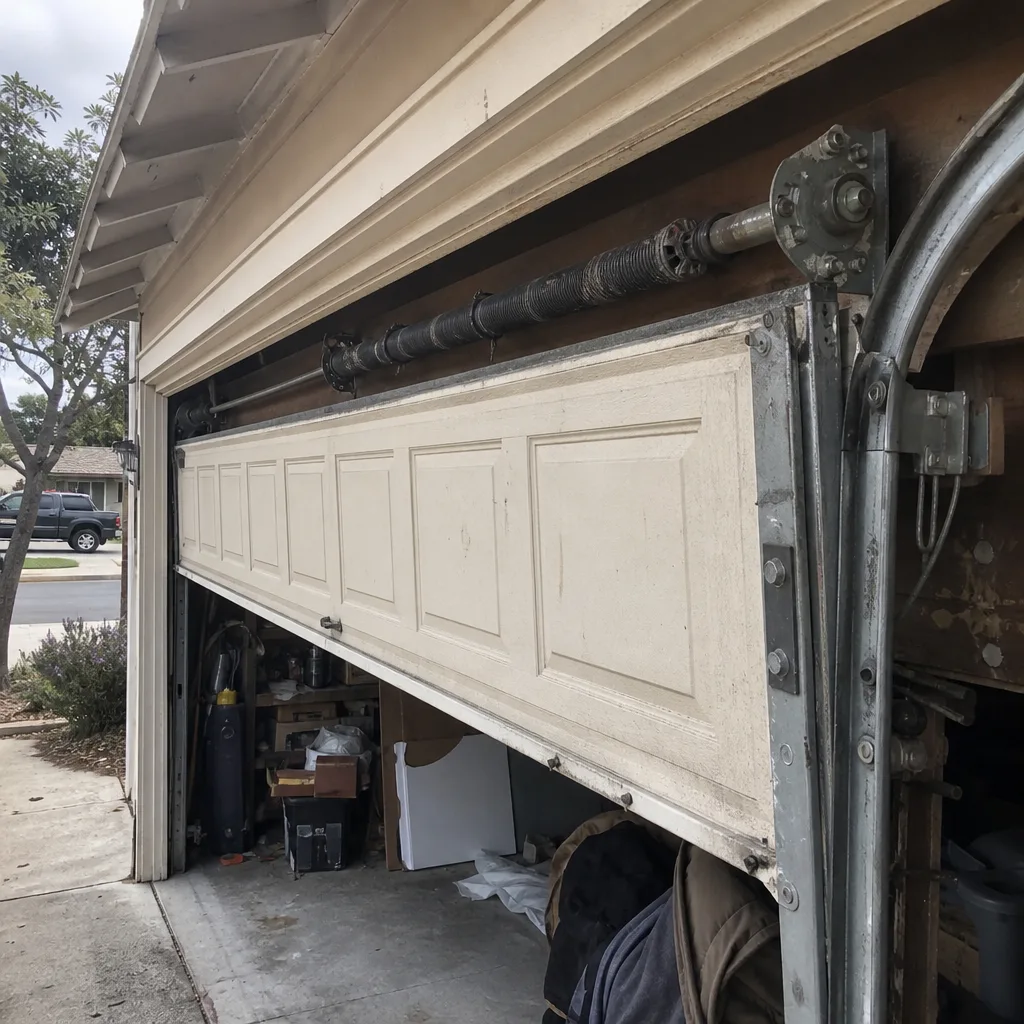 Before
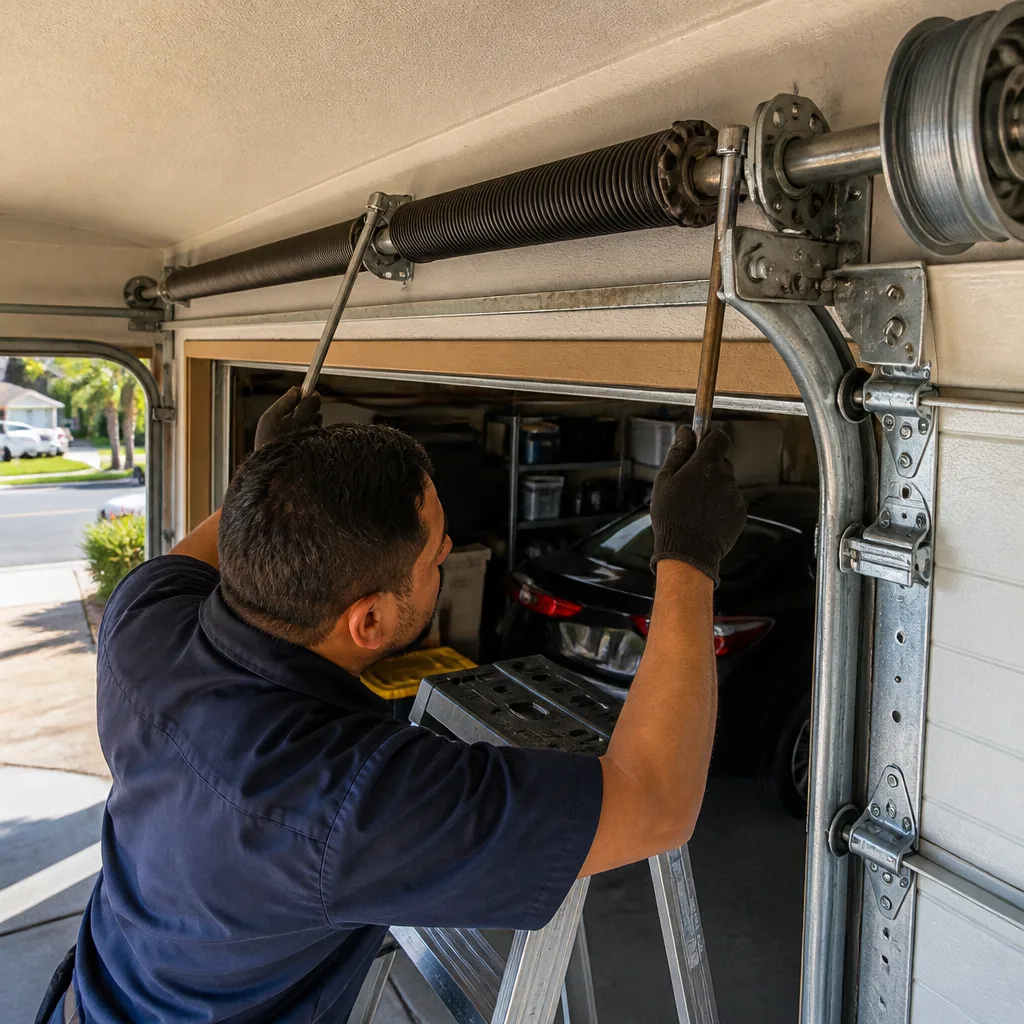 After
After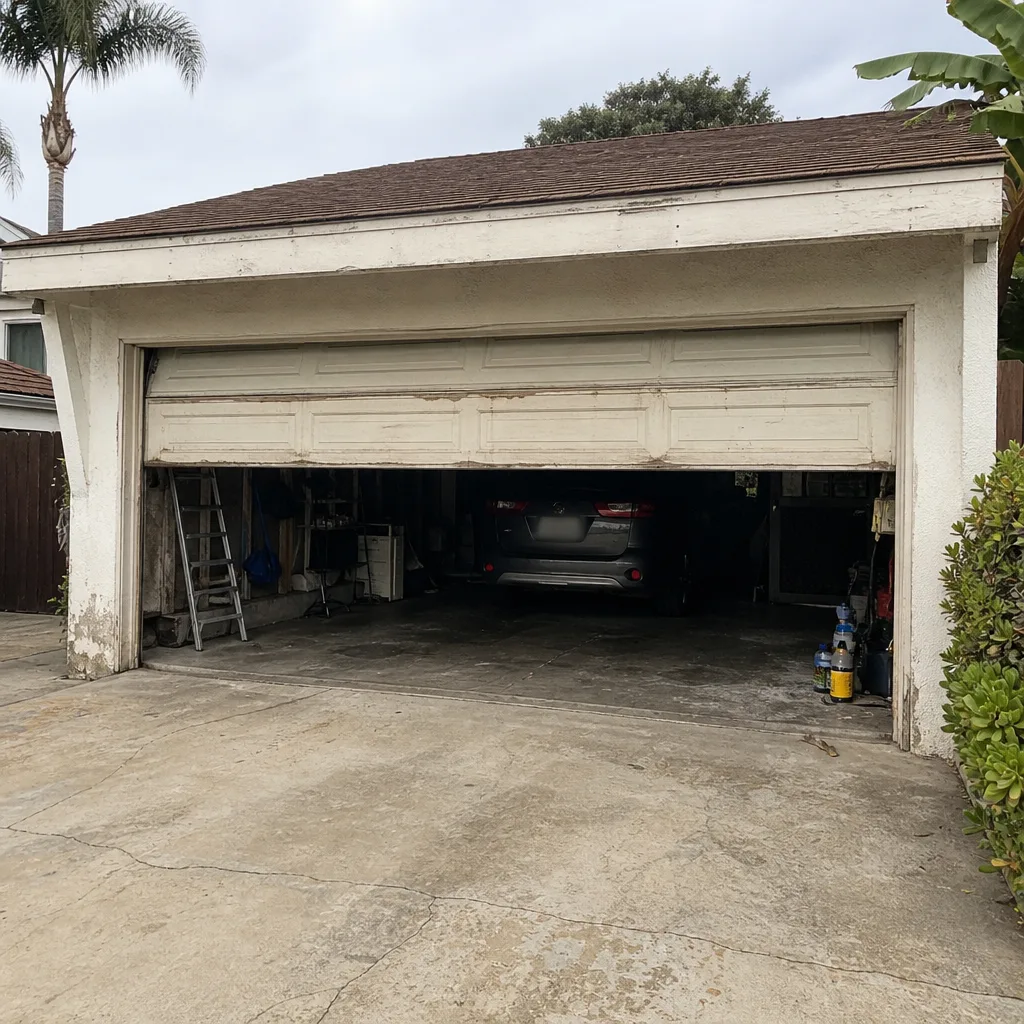 Before
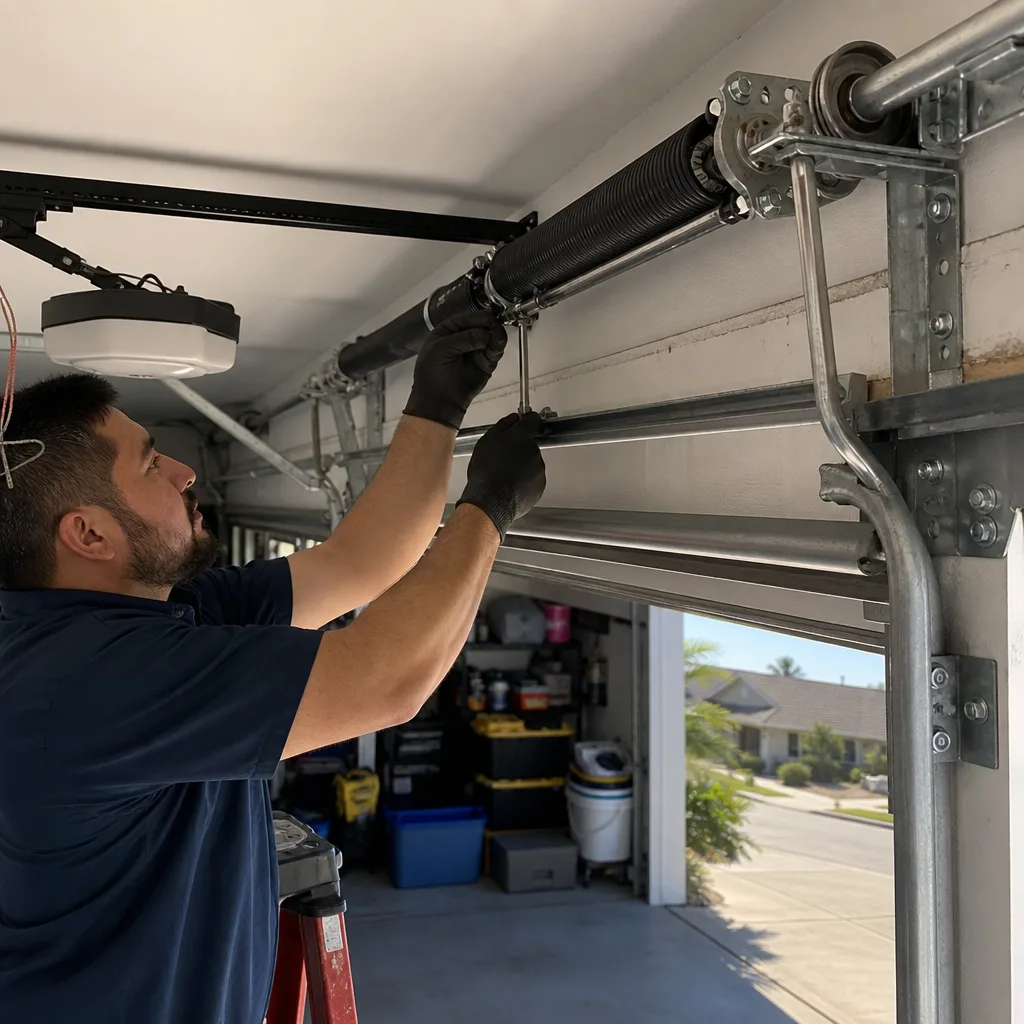 After
After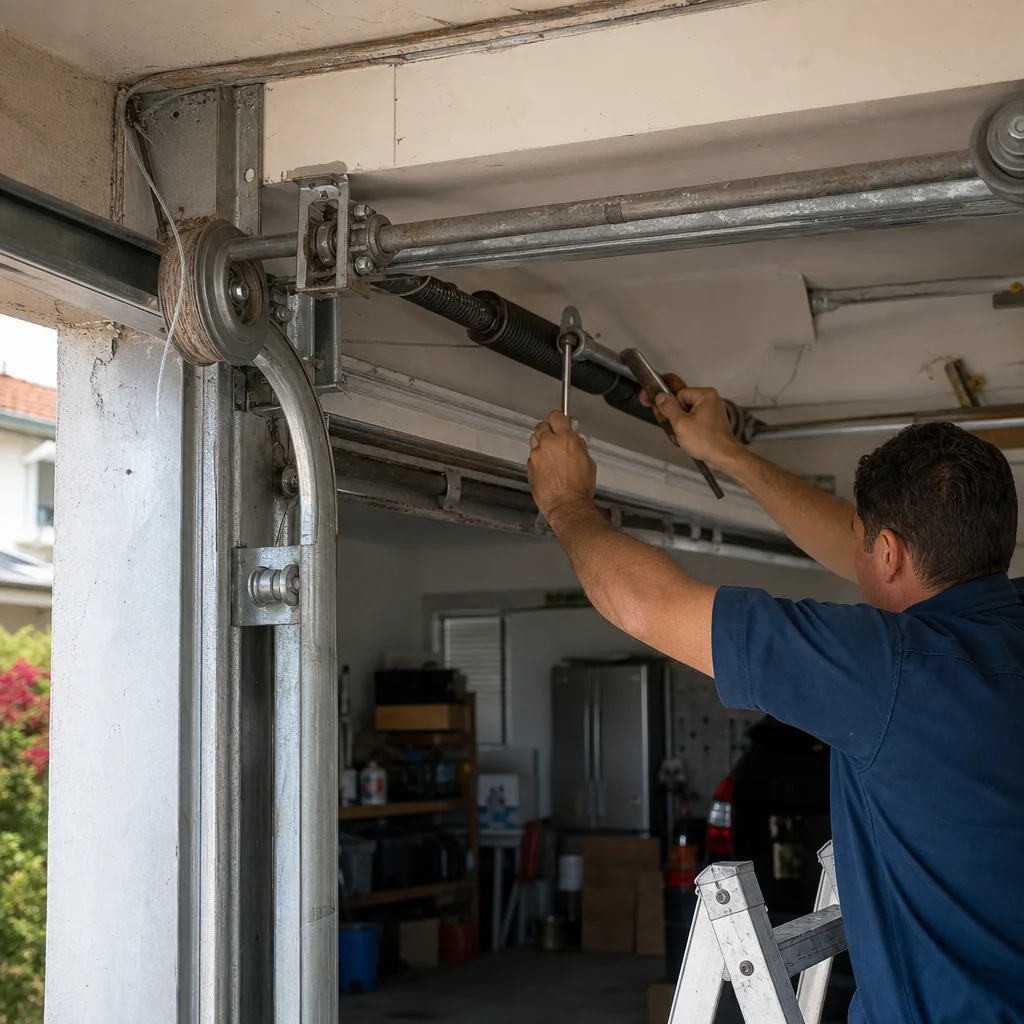 Before
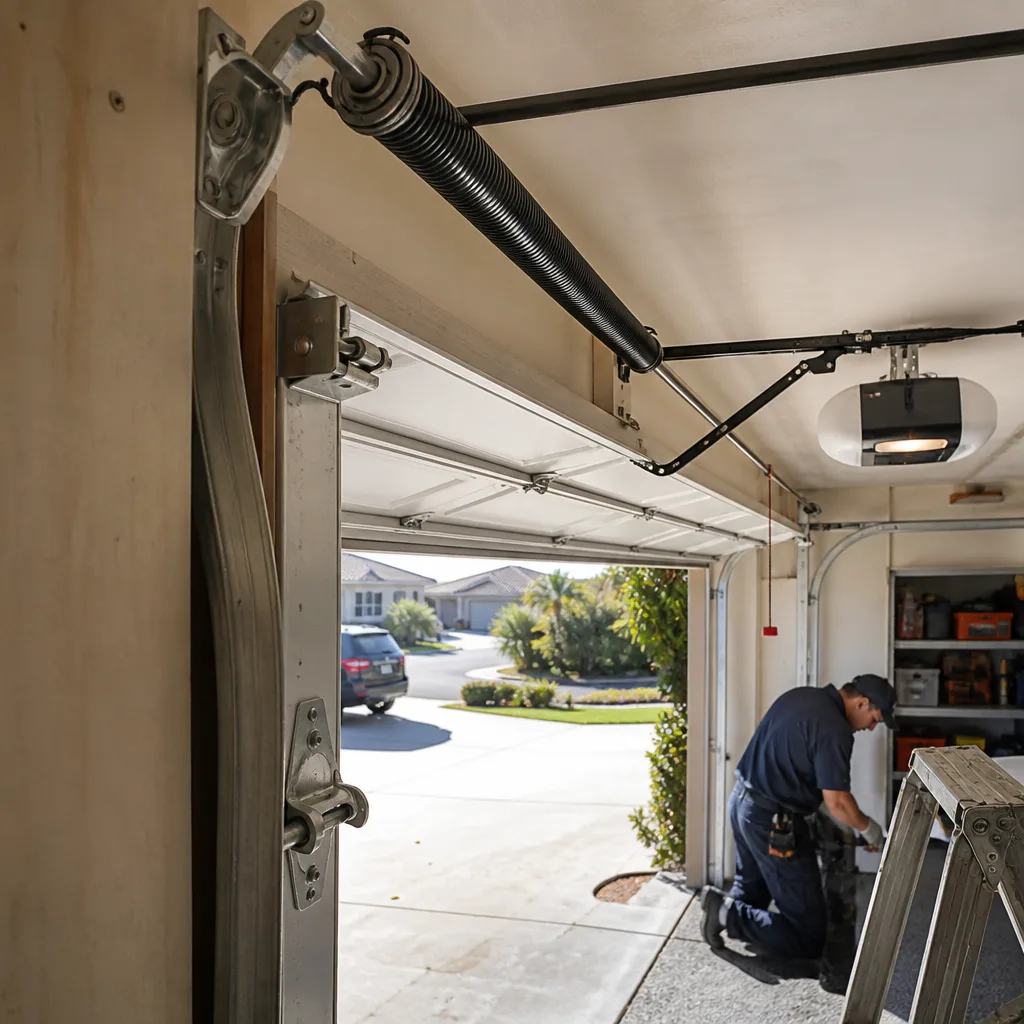 After
AfterWhen to Call a Professional
Some garage door work in San Diego is genuinely dangerous, and the line is drawn at anything involving high-tension components. Torsion springs, extension springs, and lift cables are under enough tension to cause serious injury if they release unexpectedly. If your spring breaks, if a cable frays or snaps, or if the door comes off its tracks, leave the door closed and call a professional. Attempting to reset a torsion spring without the correct winding bars and experience is one of the most common causes of garage-related injuries in the U.S. The same caution applies to any repair that requires working under a door that can’t be locked in the open position.
If you’re in San Diego and looking at any of these situations, Garage Door Repair in San Diego is our core service and we’re happy to walk through options over the phone. Bramwell Garage Doors San Diego offers free estimates throughout San Diego, with a live person answering the phone day or night. Call (619) 374-2463 and we’ll give you a straight answer before we ever send a truck.
Frequently Asked Questions
Most torsion spring replacements in San Diego run $150 – $280, parts and labor included, while extension spring replacement typically runs $130 – $240. High-cycle torsion springs, which last roughly twice as long as standard springs, add $40 – $70. Call (619) 374-2463 for an exact quote, because the spring type and door weight determine the final price, and our estimates are free.
In most cases, yes. We stock the most common springs, cables, rollers, and opener parts on our trucks, so the technician can usually complete the repair in one visit. The fastest way to get a same-day appointment is to call (619) 374-2463, where a live person answers 24 hours a day, including weekends and holidays.
Not at Bramwell Garage Doors San Diego. The technician diagnoses the problem, then presents a written price before any work begins, and that number matches the invoice. If a company tries to raise the price at the door, that’s a signal to stop the job and get a second opinion.
Yes. Our trucks carry torsion and extension springs in the most common sizes for San Diego homes, along with cables, rollers, hinges, brackets, and opener parts for LiftMaster, Chamberlain, Genie, and Craftsman systems. Most repairs are completed in a single visit.
Yes, and the effect is most pronounced within about two miles of the coast. Salt film settles on metal components nightly and accelerates rust on springs, hinges, and steel door panels. Homes in Point Loma, Ocean Beach, Pacific Beach, and La Jolla benefit from corrosion-resistant finishes and galvanized hardware, which typically add years to a door’s lifespan.
The 365-Day Done Right Promise means if a covered repair fails within one year, Bramwell returns and corrects it at no charge. The coverage is written on the invoice, including which parts are covered, whether labor is included on return visits, and the guarantee duration. For spring replacement, this means a spring that breaks within the guarantee period is replaced without a second invoice.
The Bottom Line
San Diego homeowners face garage door decisions that generic guides miss: salt corrosion within two miles of the Pacific, UV fading on south-facing doors, stucco rough openings that require field measurement, and HOA rules that can void a purchase after the fact. The practical approach is to check HOA guidelines first, require a written price before any work starts, choose corrosion-resistant materials based on your distance from the coast, and insist on a written guarantee that names the parts, the labor, and the duration. Whether you’re replacing a broken spring or a full door, those four habits prevent most of the expensive mistakes we see. If you’re in the San Diego area and want a straight answer on your specific door, call Bramwell Garage Doors San Diego at (619) 374-2463. We’ll measure, we’ll quote in writing, and we’ll back the work in writing.
Written by Marcus Ellery, Owner at Bramwell Garage Doors San Diego, serving San Diego since 2001.